GIS - Geographical Information System - are tools useful to take a decision in a situation based on the data. Often they are named decision making systems and their power is the spatial relationship between the data.

A GIS has inside characteristics and functionalties of a CAD and informations organized like a DB. This mean that who use a GIS can draw the information adding all characteristics, all details and all properties useful to the complete modellization of the studied phenomenon. This will be useful to measure, monitorize and understand all the possibles phenomenon's evolutions in real life.
GIS are crosses and flexibles, they can be used in almost all knowlegde's fields; from urban design to economy, from sociology to climate changes.
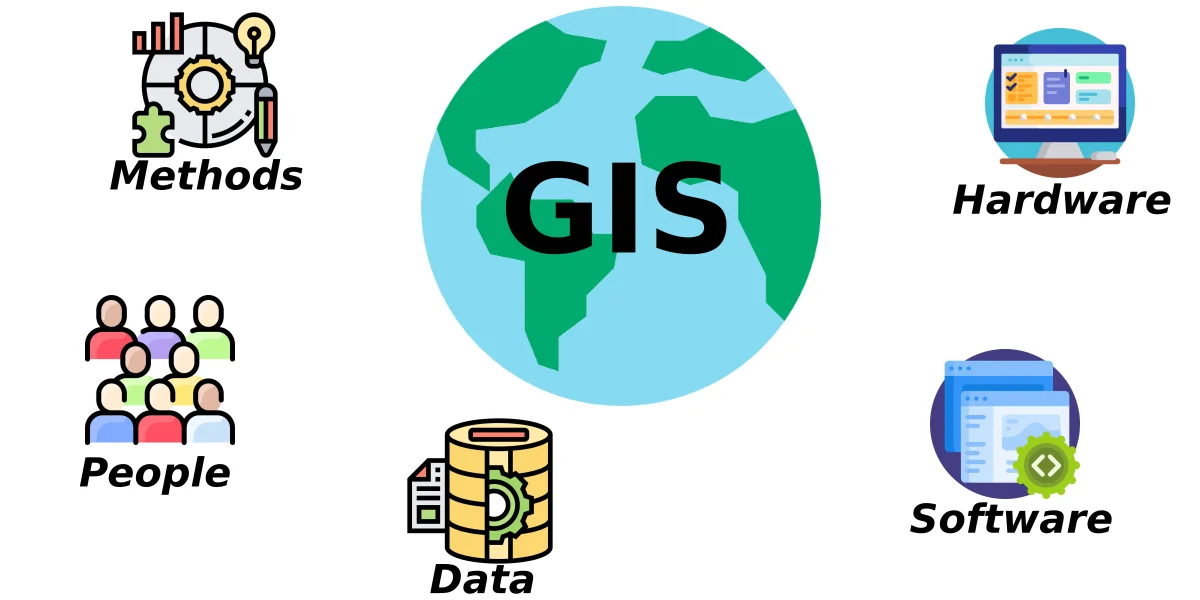
A GIS is made up of:
- hardwares: personal computer, tablet, printer, scanner, etc..;
- softwares: specific tool made for create, manage and handle GIS data and procedures;
- data: the core of a GIS;
- methods: the set of procedures useful to analyze an event or manage GIS's data;
- people: designers, datascientists, system administrators, policymakers, citizens, etc..

The GIS's products are thematic maps, webgis, geographic databases as-is or geographic databases derived from non geographic databases, a deeper knowledge of the our area of interest. As I said before, thanks to their flexibility, GIS are used from a various type of experts like engineers, urbanists, climate scientists, economists and all can contribute to the better knowledge of environmet's changes produced from human footprint or from the natural evolution.