Last week I published on social media a reflection of mine gained following a chat with a graduate student. If you haven't had the opportunity to read the reflection you can find it on Linkedin:
or on Facebook in the group GIS Italia.
Judging by the diffusion and large number of favorable comments, as well as by the similar experiences reported by some, I would say that there is a problem. It's a problem of methodological approach:
GIS is associated with software.
It is not so, it is not never been!
Let's take a step back.
What are GIS?
On many texts it is you can find this wording:
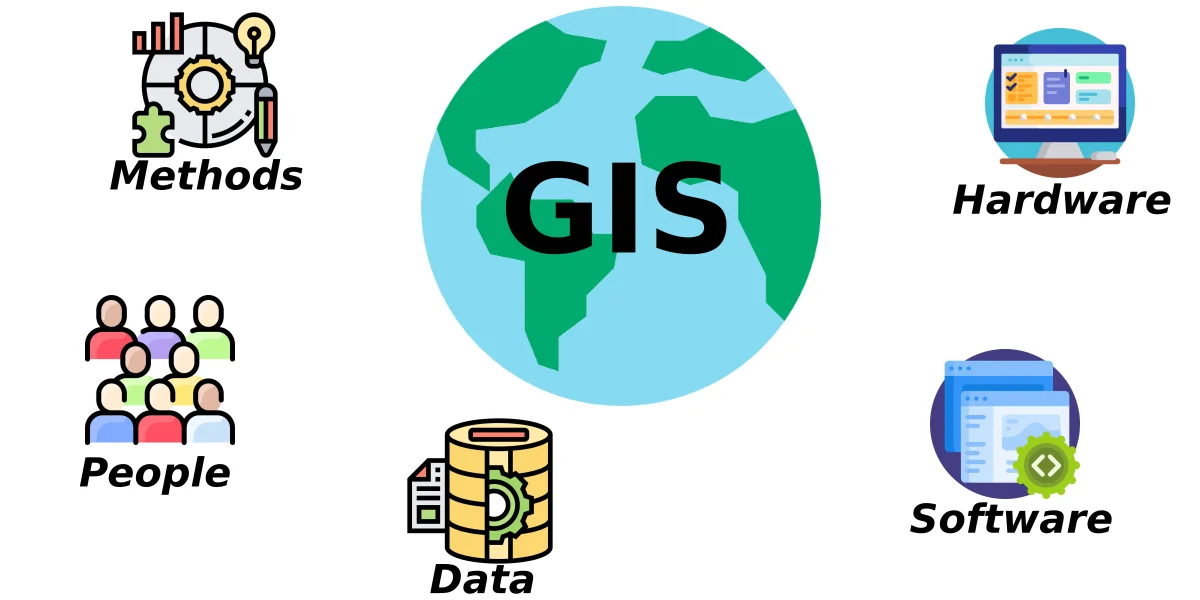
"A GIS is the set of hardware, software, data, people and analysis techniques."
I count five elements among which the last three stand out, or rather I would say they are fundamental. John Snow teaches!
If data is missing, people cannot apply analysis techniques to solve the assigned problem. If analysis techniques are not known, people cannot solve the assigned problem with data alone. If people are missing... the data alone cannot be analysed. Hardware and software are an addition, they certainly speed up analyses, but with the right methods you can get to the result even without them. Again, John Snow teaches!
Let's remember that GIS are decision support systems; they provide data and analysis that decision makers use to decide which scenario is appropriate. better to choose.
Another incorrect approach that is increasingly is often passing the one for which since the PC is used to "do GIS", then these are developer topics. And in fact, every now and then we find requests online from developers who, among the various basic programming languages in their background, must also know GIS. Yesterday, joking with a friend, I said that since nowadays we mostly write using the PC, then a poem can be write a developer.
If on the one hand it is It's true that having a minimum of software development skills nowadays is essential. fundamental, even for those figures who have traditionally never been close to the world of software development such as geologists, architects or sociologists; this is because we are in a world of work that is increasingly towards complete digitalisation, on the other hand it is also true that everyone has their own specific skills.
The array of coordinates that make up a GeoJSON, for example of polygons, is for a developer a set of points that make up an object; he is able to filter it, rework it with the most various programming languages and manage it with the latest web framework. For a civil engineer the same information is an area subject to landslides to which it associates essential information such as the type of soil, the slope, the exposure and the presence or absence of structures. A civil engineer MUST know GIS analysis methodologies, even those that require a minimum of knowledge of software development, a developer does not, he must know programming.
A few years ago I created the column A GIS for... in which I included some of the many applications of GIS techniques or methodologies. You will not find Web-GIS in that list because it is they are nothing more than the web transposition of GIS analysis.
The GIS methodology is approached for a purpose, not to learn the software, because it is being a methodology, it requires those who use it to carry out critical reasoning to solve the problem they are faced with. been assigned. Unfortunately, I often find myself talking to people who are they were taught the software and not the methodology, so all they have to do is change the graphics and they no longer know what to do. do not even the basic things. This is because they didn't teach him to develop critical thinking, they didn't teach him to reason spatially, but he been taught to press a key.
If by reading this further reflection of mine you see yourself among those who are been taught to press a button, then change your approach as soon as possible and acquire the skills to develop spatial reasoning.
If by reading this further reflection of mine you see yourself among those who have always thought that GIS were software, then I hope that I have managed to change your mind.
If you are a person employed in the human resources sector I hope you have understood that, if you are looking for a marine biologist to develop the coastal monitoring app, you are wrong! The marine biologist puts you on the GIS analysis flow for coastal monitoring, perhaps even throwing down a few lines of code, but then it's done. the developer or developers who take the material he has produced and put it into a system to create the app.