Can It happens that you find yourself faced with this doubt and don't know which "path" to choose between a shapefile and a geodatabase. I will look for briefly to clarify but before going into detail it is appropriate to give an explanation of what a geodatabase or cartographic DB is; will be useful both to those who come across it for the first time and to those who already have it. had experience.
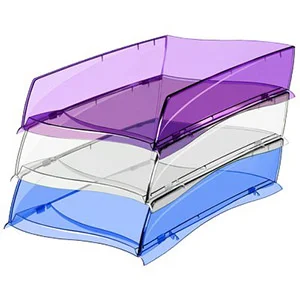 Imagine your geospatial calculations as sheets on a desk, a geodatabase can be compared to a desk binder. They are modular "tools", you can add compartments to stack on those that already exist. to increase the capacity of the collector, it is possible to insert labels in order to search among the most relevant sheets. quick. It is a safe environment that allows you to have all the sheets in the same position, immediately at hand.
A shapefile, on the other hand, is one of those papers you have on your desk. When there are too many you will find yourself with a desk invaded by piles of indistinct papers and of which you will not know what is there. reported.
Going down a little further in the technical sense, a geodatabase associates the spatial component with a database, therefore bringing with it all the characteristics of a database.
What is a database then?
A database is an organized collection of data.[1] It is the collection of schemas, tables, queries, reports, views, and other objects. The data are typically organized to model aspects of reality in a way that supports processes requiring information, such as modeling the availability of rooms in hotels in a way that supports finding a hotel with vacancies. Source Wikipedia
A database is therefore a set of data collected in schemas, tables, queries, report views and other objects. This data is organized using a logical model that can be be relational or hierarchical. Furthermore, a database must be organized with minimal redundancy, that is, there must be no unnecessarily duplicated data. These are just some characteristics of a database that are fully embraced by a geodatabase.
It is also appropriate to say what is a DBMS. A (geo)database is often confused with its DBMS; the DBMS - DataBase Management System - is nothing more than a system for managing a database, be it "traditional" or geographical. A client must be associated with it which, by interfacing with the DBMS, allows a series of operations on the data contained in the database and managed by the DBMS. An example of a DBMS is Postgresql/PostGIS, while one of the clients is QGIS.
Returning to the introductory question: is it Is it better to choose a shapefile or a geodatabase? The answer is; Depends! The type of processing depends on how much data you have. Also based on the quantity of data contained in our vector, and therefore not only to the quantity of vectors, we can choose which path to take; here is a very interesting video on a performance test between shapefile and geodatabase.