
In mid-May the following notice about the P.U.M. (Urban Mobility Plan) was published on the website of the municipality where I live, Casalnuovo di Napoli.
I therefore considered it necessary and appropriate to send my observations not only as a citizen but also as an urban cyclist. As many of you will know, sustainable mobility has been one of my recurring interests for a few years and on quite a few occasions I've written articles about it here on this blog.
After carefully reading the Plan, the first thing I did was create a survey to understand how and where my fellow citizens travel.
From that survey, which lasted about ten days and in which 152 people participated, some data emerged that I think is interesting. It should be underlined that the survey has no statistical value; it is still useful, however, for a series of reflections that I will briefly present below.
First of all, the key figure is the modal split. The modal split is an indicator that helps us understand how the population of an area is distributed (to split in English = to divide) with respect to the various types of modes of displacement. The travel categories considered are: on foot, by bicycle, public transport, car/motorcycle.
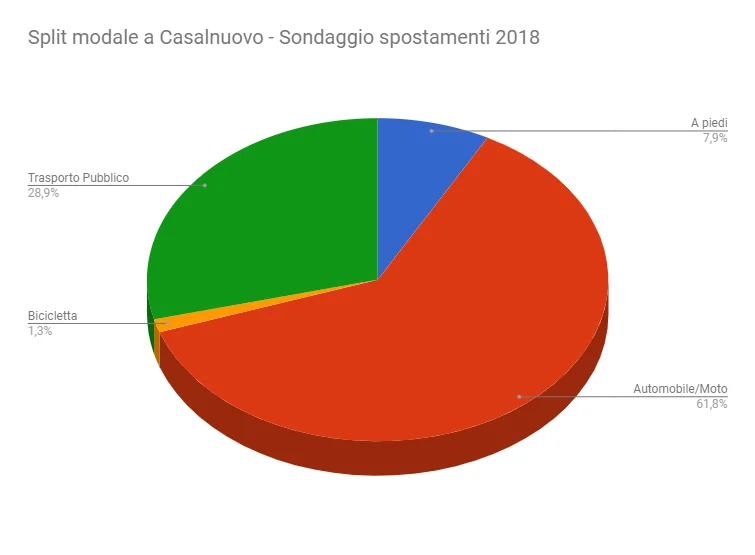
As you can see from the image, unfortunately the car reigns supreme. Despite its shortcomings, public transport is the second mode of travel, the bicycle stands at just above 1%. Casalnuovo di Napoli is therefore a STARTER city, using the classification of cycling cities proposed in the "Transport Learning" course:
- STARTER, city with a share of cyclists no more than 10%
- CLIMBER, city with a share of cyclists between 10 and 30%
- CHAMPION, city with a share of cyclists exceeding 30%
There is therefore a great deal of work to do, and it would not be an exaggeration to say that we are starting almost from scratch. The Zona 30 proposal for the entire municipal urban area included in the PUM goes in the right direction because such a tool can encourage people to travel by bicycle by increasing safety for all categories of road users. The insecurity due to cars and their excessive speed is one of the reasons that lead to not preferring the bicycle as a means of travel.
Another thing that I think is interesting is that relating to public transport. Casalnuovo is served by the FS line that connects Caserta to Naples, by the EAV (Baiano section) with 4 stations and by three CTP lines.
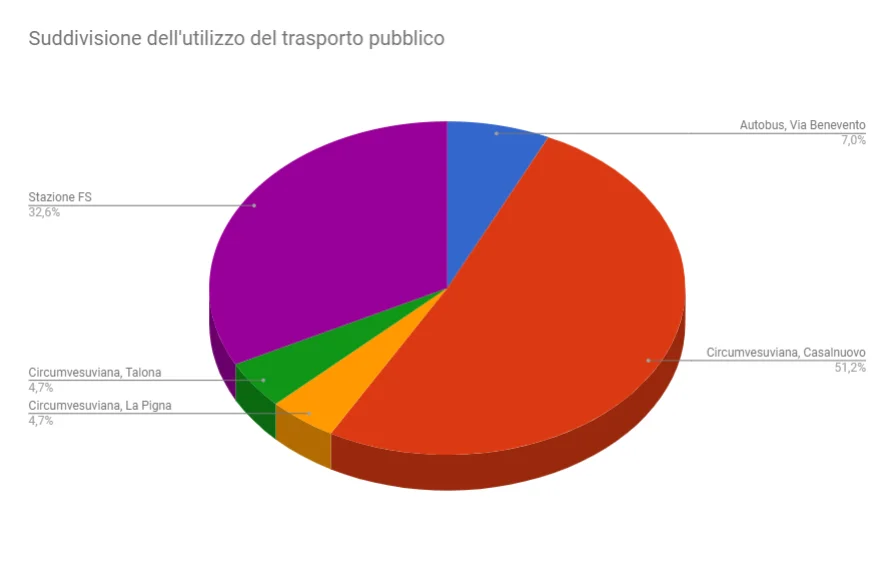
Over the years the CTP crisis in conjunction with the perennial road resurfacing works in the Casalnuovo center area have drastically reduced the use of buses. Rail transport is the prevailing one and the Casalnuovo EAV station is the one that sees the greatest flow of users. The EAV Salice station does not appear among the choices despite being included in the survey. This matters because one of the main points of the proposed PUM is to turn Salice station into an intermodal hub by securing and activating the large car park in front of the station, an area now totally left to abandonment and degradation which over time has become an illegal landfill. By activating Salice as an interchange hub, urban traffic could be reduced because people who currently head toward the city centre to reach the Casalnuovo EAV station would find a quicker and more convenient alternative in Salice.

Another interesting fact is that of the distances traveled by those who go to work by car. 70% of those who travel in this way do so for distances shorter than 16 km, distances that can easily be covered through alternative travel options, and Naples is the main destination of these movements.

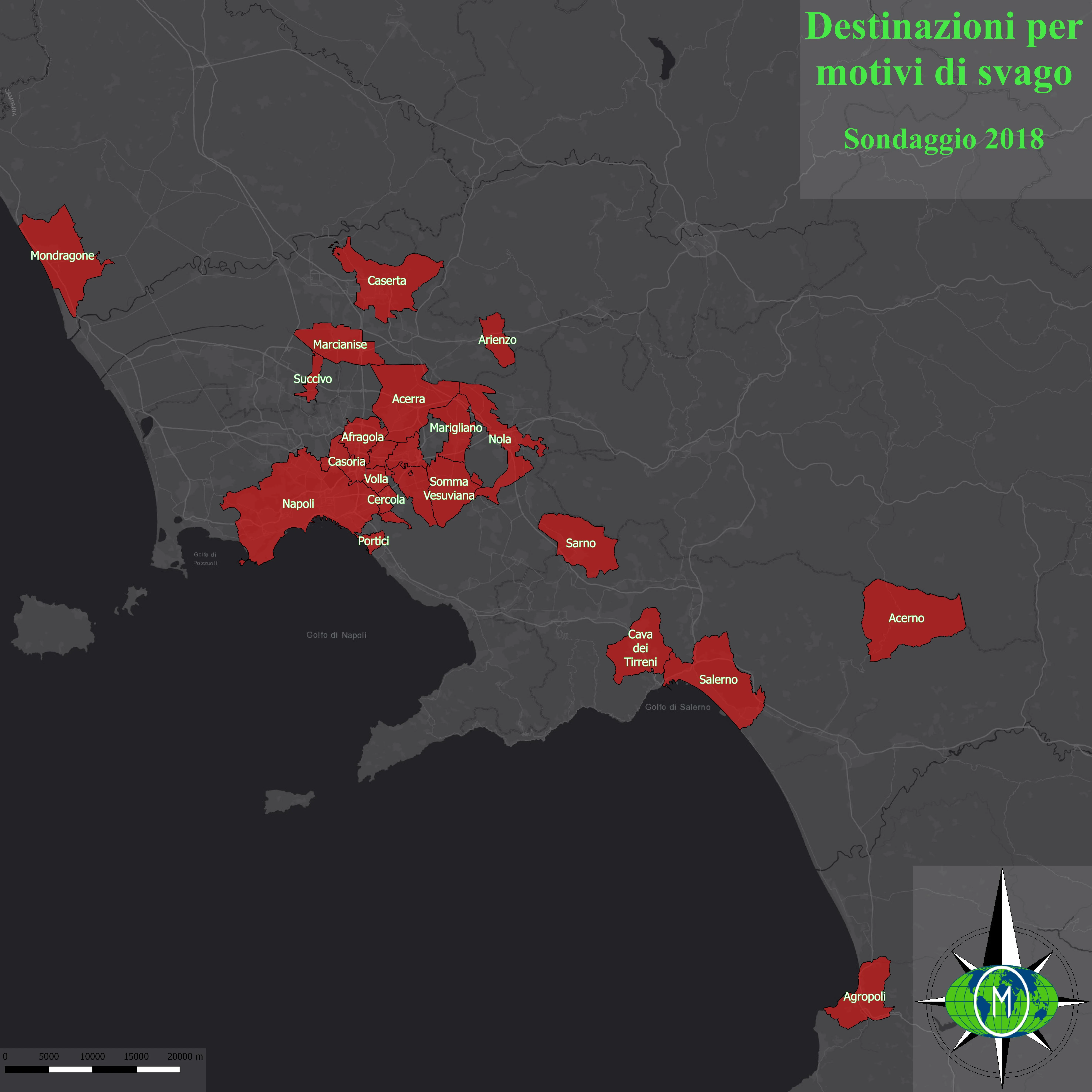
On the other hand, 75% of those who use the car to travel for leisure do so with a distance of less than 16km; the same reasoning applies here, although in this case Pomigliano d'Arco is the main destination for most of these trips.
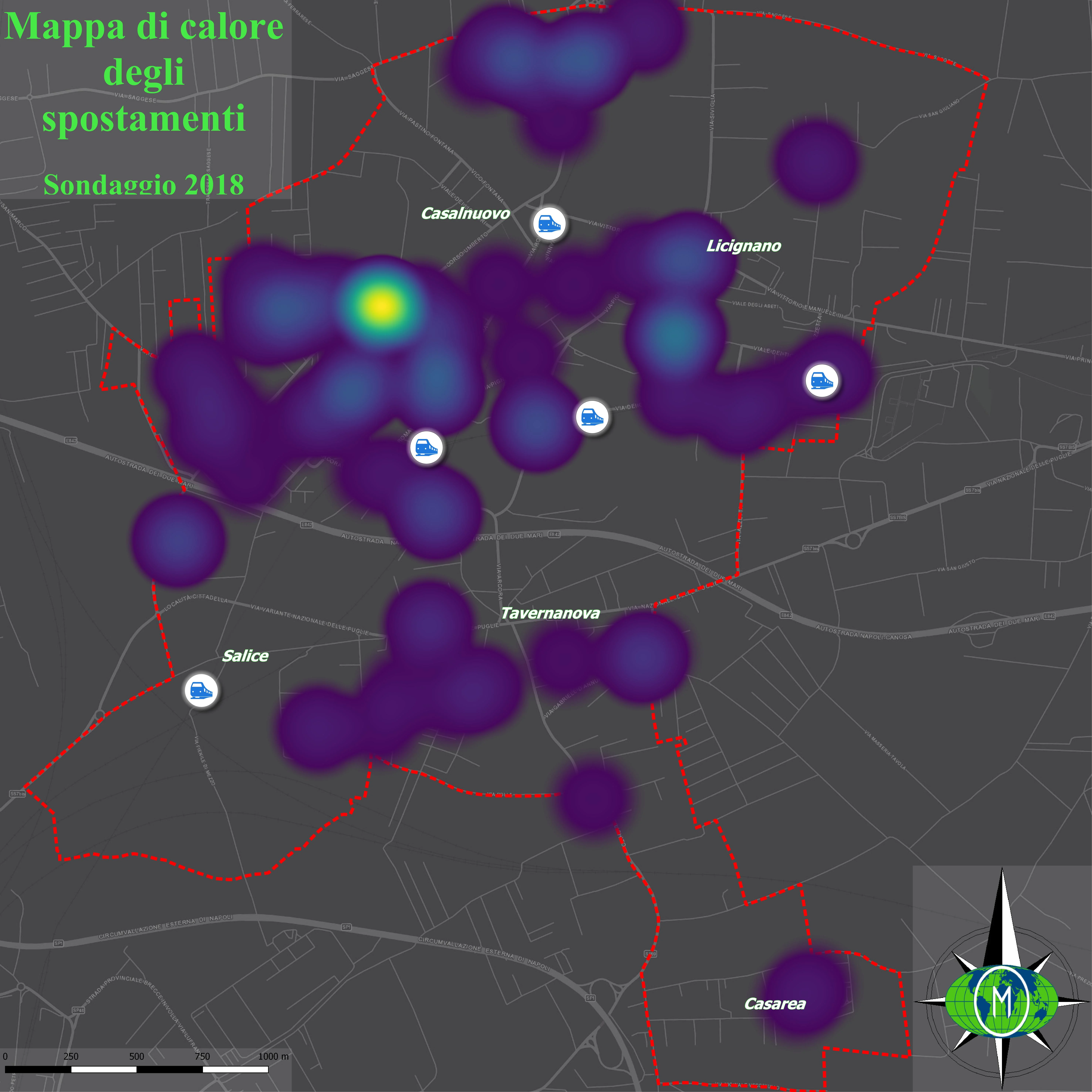
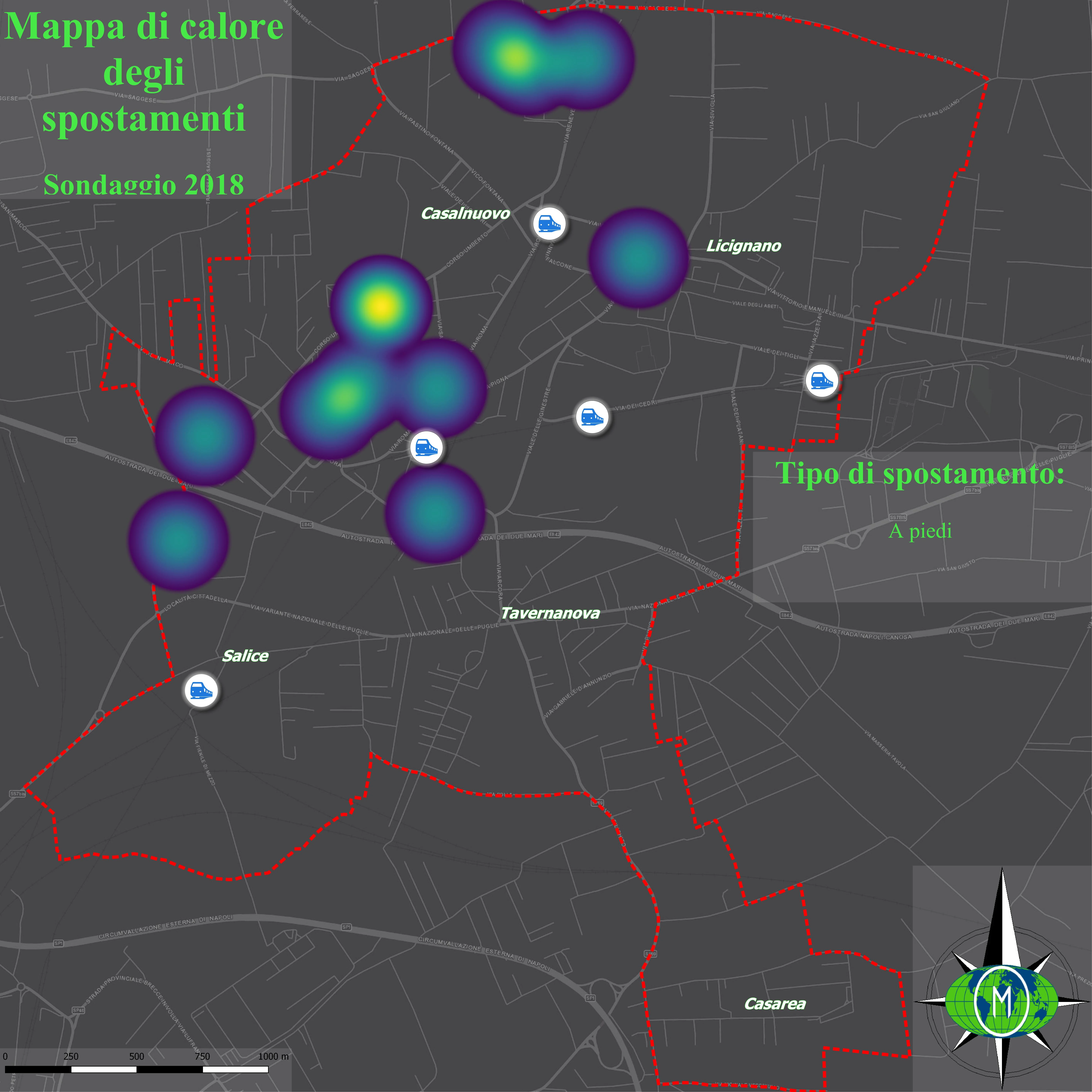
I close by showing the mapping of the responses to the survey.
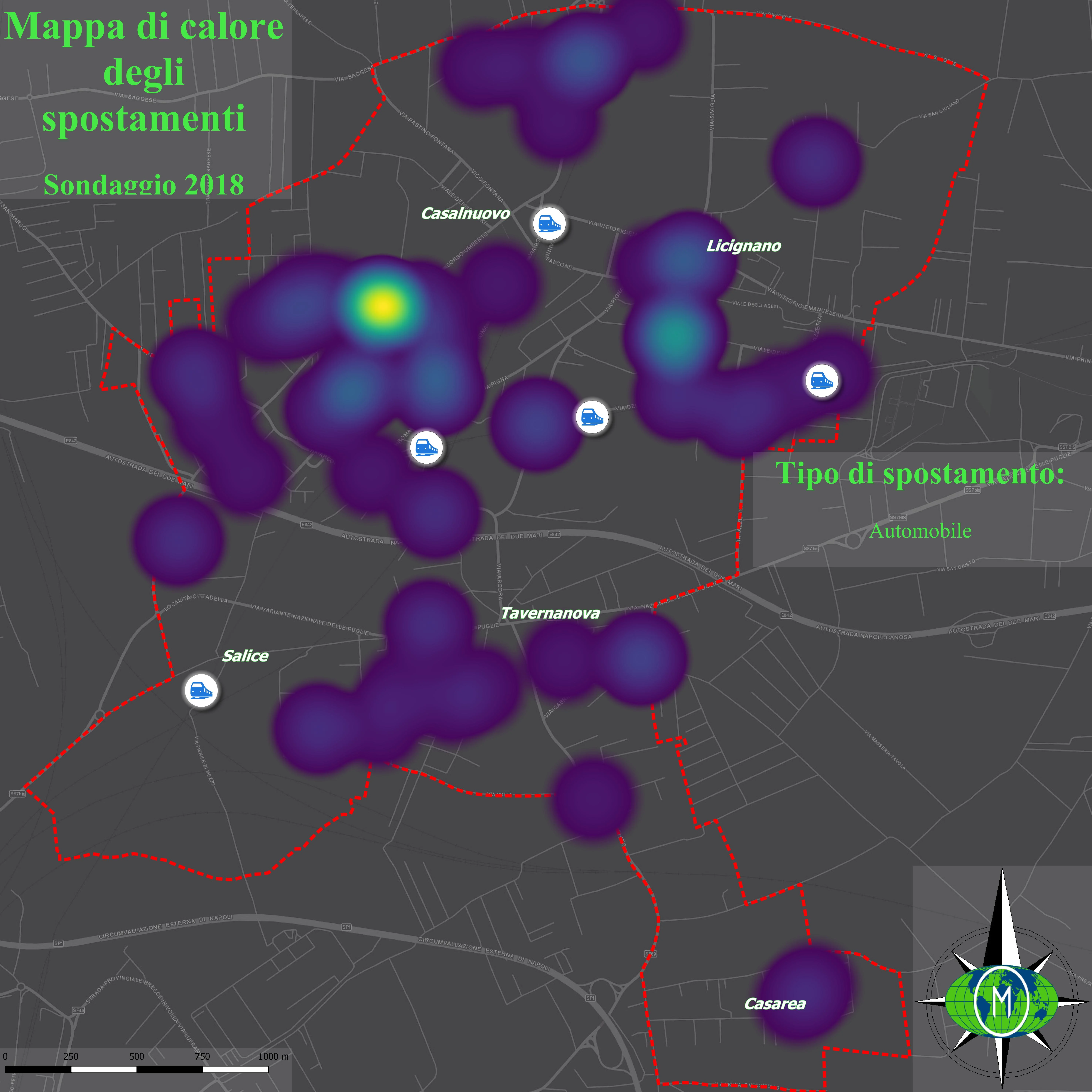
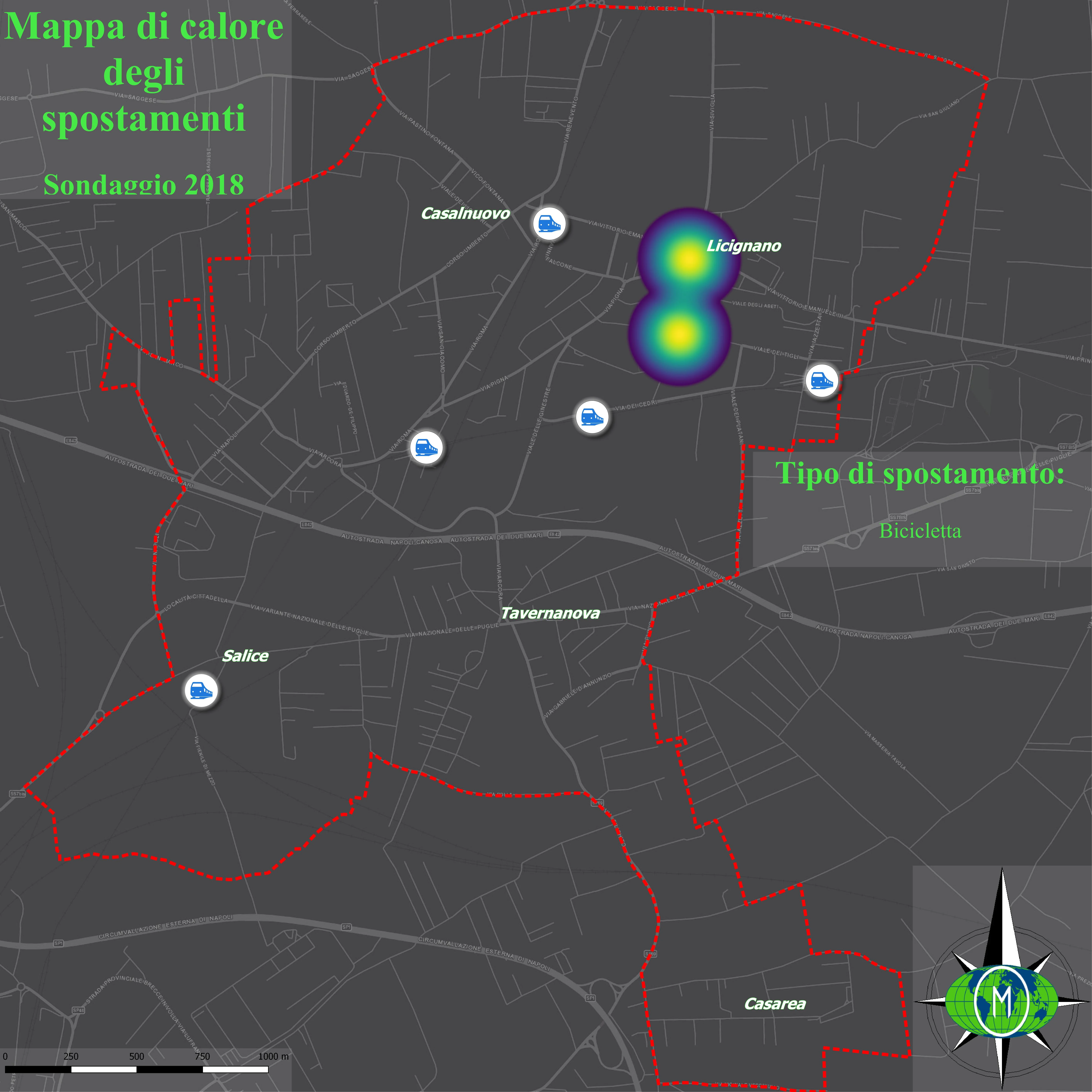
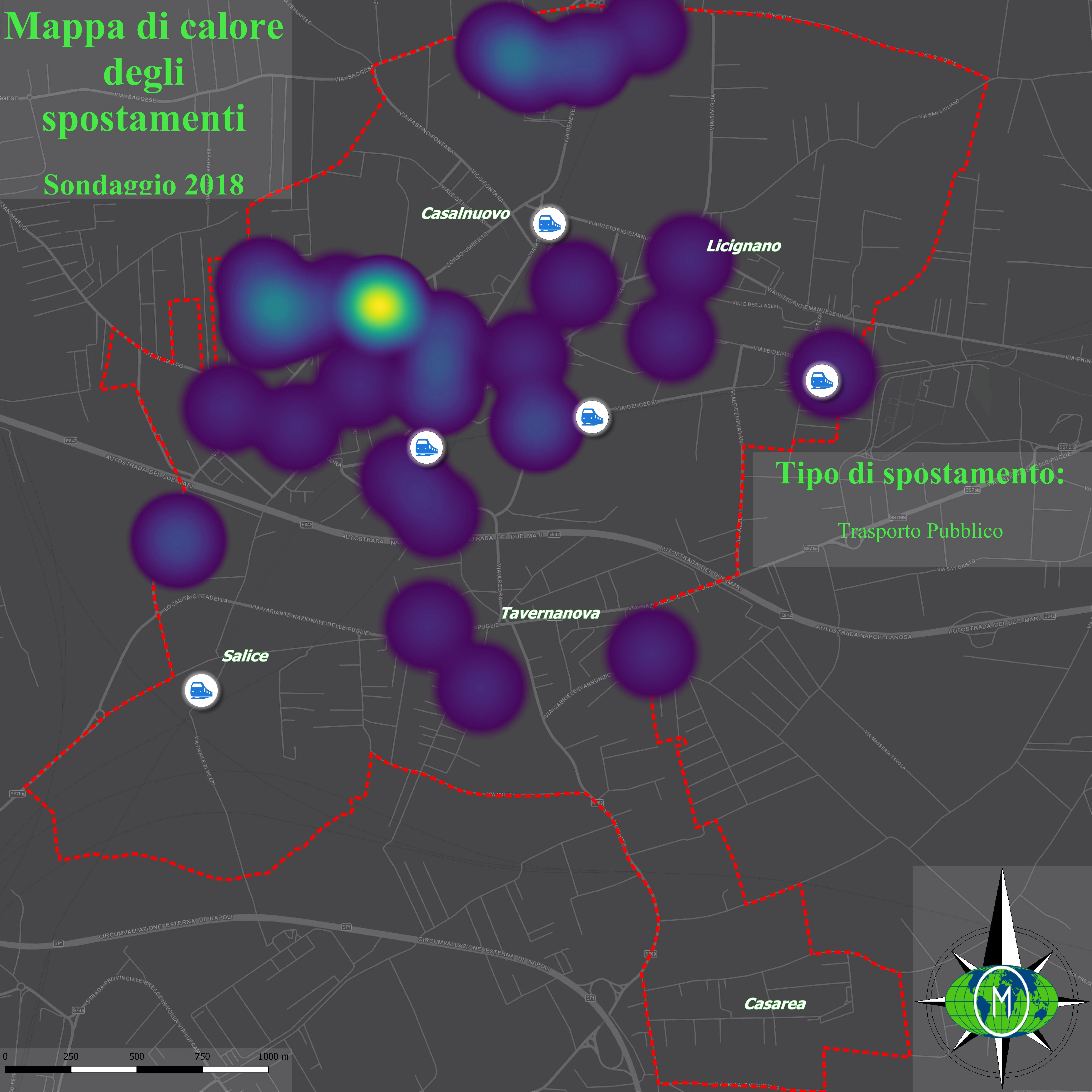
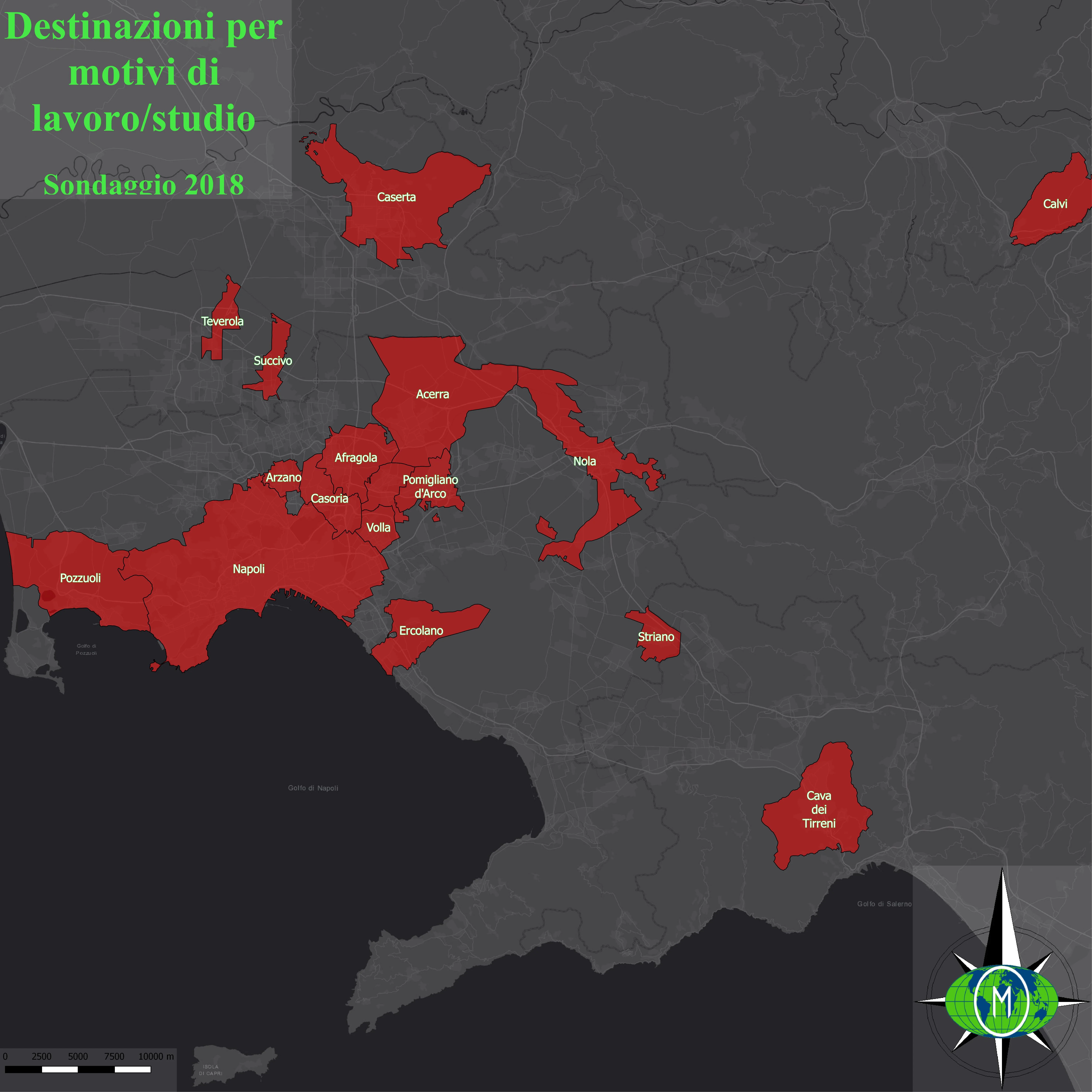
If you want to know the details of the observations I sent to the Municipality last week, you can download the attachment to this article.
Map of car parks provided for in the PUM