
I wanted to make sense of this Sunday's standing still sweating (we're only in mid-June and the temperatures are already above 30 degrees in almost all Italy!) so I decided to take a bike ride to find some relief from these 29° to 6pm on June 15th with 60% humidity.
I have a route for quick exits, a little further than of 20 km to be covered in an hour and which winds through the most popular part of the Province of Naples. close to the regional capital.
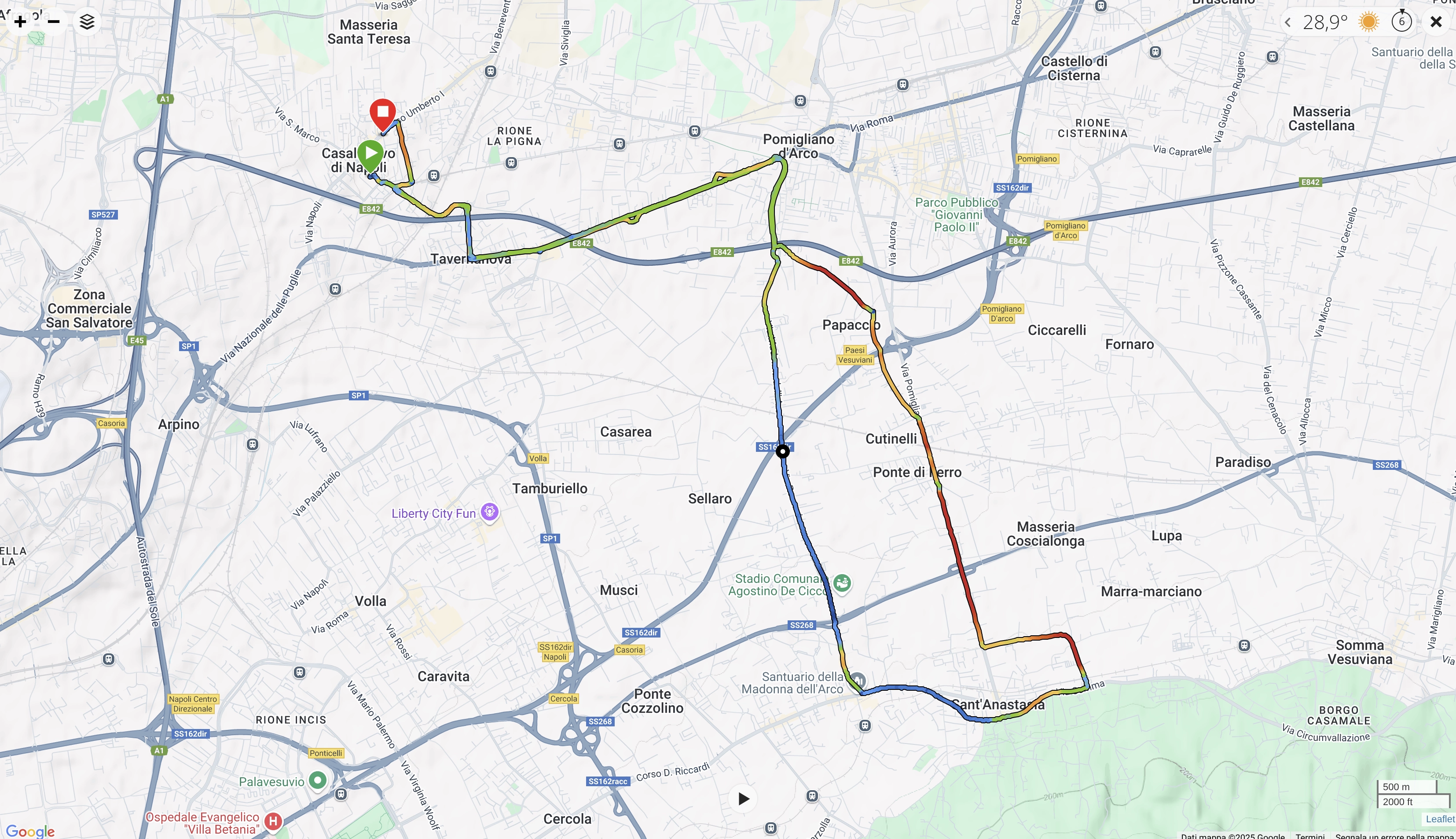
This route takes me through more urbanized areas. or less intensely and some campaigns. As I wrote at the beginning, the tour was intended to be an escape from the heat in my own way.
In the hour or so I was able to "understand" when I entered urbanized areas not only with my eyes but also with the sensation of hearing more. or less hot. There was in fact a barrier invisible to the eyes, near the of urbanized areas, which was a clear indicator: hot air!
In non-urbanized areas I pedaled through pleasantly cool air, while in urbanized areas that same air made me feel as if I had a hairdryer pointed towards me. I clearly perceived the passage of the zone.
I could really feel the heat coming from the ground, from that often black asphalt or from those lava stone paving stones typical of the areas where I live. Every now and then a few rows of trees let me pass through bubbles of fresh air again and with every pedal stroke I couldn't help but think of all those approaches to urban development that have been talked about for decades but which are not implemented. For example the Nature Based Solutions and possible territorial analyzes aimed at identify the areas of priority intervention.
But if from a technical point of view we have the scientific approaches to identify the areas of priority intervention and therefore act with solutions on the ad hoc urban system, how are we doing from an economic point of view?
I have the feeling that we do not have a holistic vision that brings together technical approaches with the necessary and indispensable economic and cultural supports. To radically change liveability of urban areas, as well as a different cultural approach on the part of those who draw up urbanization projects, at any level, is the right and substantial economic support is essential, whether in the form of public funds or project financing. Climate change is here, but we are not ready yet.